Todays society has so many unspoken and assumed ‘rules’.
Be it in shops where you will find an array of pink in the ‘girls’ section and blue ‘for boys’, or how a child is expected to kiss their family member goodbye despite saying “No, thankyou”. When did these silent expectations begin to dictate how we live and how we are socially accepted?
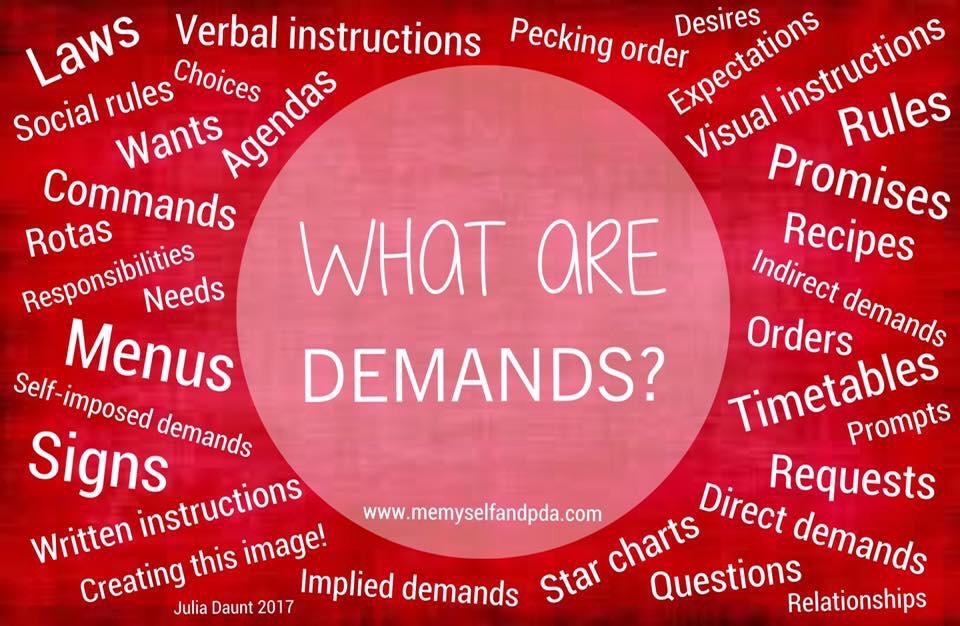
PDA (or pathological demand avoidance) describes the difficulties that a person can face with everyday demands. It could be brushing your teeth or waiting for a bus- these daily tasks can feel like an attack to a person with PDA. People with PDA often have high levels of anxiety, living in fear of the unpredictable world around them. Lots of people are often described as ‘Jekyll and Hydes” due to their fight or flight response meaning they can experience unpredictable and extreme meltdowns which could be running off, lashing out or stimming at the simplest of ‘demands’.
Although PDA behaviours can seem very extreme (and unrelenting at times), it is important to remember that the person going through this is only trying to keep themselves feeling safe. It’s no different from a person passing out; the body needs to ‘shut down’ to reset and then, when feeling safe to do so, they will ‘wake up’.
Other features of PDA can include:
- Manipulating situations to feel in control.
- Withdrawing and/or physically excusing themselves.
- Listening to a request but then not acting upon in.
- Seemingly ignoring the world around them.
- Defiance and/or negotiating a request put to them.
- High anxiety
- Creating distractions and changing the topic.
- Unaware of ‘social norms’.
- May seem chatty and confident but lack further depth in understanding conversation comprehensively.
These are some, but not all, charateristics of PDA. PDA is often also associated with being part of the autism spectrum.
I read an article the other week and it really gave me another perspective at thinking about my LO’s PDA.
Children with PDA often resist praise and will react negatively if given to them. Obviously this isn’t accurate in all cases but I, personally, have experienced this with my Little Man.
When a child with PDA is acting upon a request you have given them they are conforming to something that they may not have felt comfortable doing…they are being praised for acting in a way that society says is right and not in a way that makes them feel secure and comfortable. This is why a lot, but not all, children can seemingly find accepting praise difficult.
To begin with it broke my heart, as a mother who wants to encourage and support her child, that my LO didn’t want the same recognition for his achievements as other people crave. That’s when i starting thinking of indirect ways that my child could still realise that i have recognised his achievements without making him feel uncomfortable.
My next blog post will be listing my personal strategies for this…so stay tuned!
You can also find more info on PDA here…https://www.pdasociety.org.uk/
Have a fab week!
 AutisMum