What is PDA?
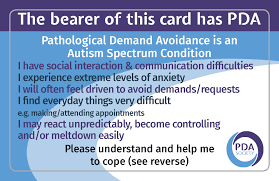
PDA, or pathological demand avoidance, is a condition that can leave a child feeling very anxious. PDA can mean that even the simplest of requests feel like an ‘attack’ to a person which can result in a fight or slight response and/or withdrawn and seemingly defiant.
PDA is not a condition that is singularly diagnosed but is often referred to as a person having ‘traits’ of a PDA profile. PDA can also be prevalent alongside other cognitive conditions such as autism.

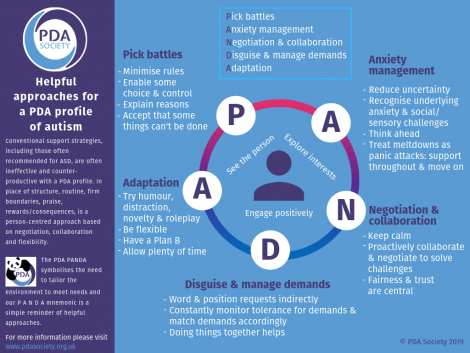
From personal experience, the strategies that are most helpful to a child with PDA differ very much to strategies that are used for an autism profile or similar. I find that a PDA approach needs to be very tailored to the individuals needs, it needs to support high anxiety and needs to allow the person to feel an element of feeling ‘in control’.
So, here are my 5 top tips (from my own experience) that help our little PDA warrior!
- Limited choices– Limit the choices to what you feel your little one can cope with. Having a wide variety of unstructured choices can be overwhelming, try to offer 2 or 3 choices and then build on that as your LO gains confidence. Instead of saying “Which book would you like from the library?” pick out a couple to choose from.
- Keep it simple!– Using long and confusing vocabulary/sentences could make it hard for a little one to understand what you are expecting of them. Use shortened requests and keep language simple.
- Be patient– We’re all guilty nowadays of rushing around, this may only create more panic for a person with PDA traits. Take your time when asking and be mindful of your tone of voice as it can be hard for some children to detect how a person is feeling through voice tone. Give them time to process what you have asked and act upon it.
- Props!– I will NEVER get tired of expressing how much we love sand timers in our house! They have been a godsend with transitions between activities and finishing our reward time! Using props such as timers can really help to visually remind and stimulate a little person into when something will finish. Maybe your little munchkin has a favourite toy or can use a clock and that can also be incorporated. The point of using props is that the request has come from something they find more predictable (as they remain the same) which means it’s easier for a child to accept.
- Shall we…?– A person that has PDA traits can feel incredibly anxious without a feeling of some kind of control. Simple requests like “Can you grab your pencil to write?” can be overwhelming as they see no scope for negotiation. Changing the way you voice these requests can help support a person with PDA traits amazingly, instead you could say “Shall we use the long pencil, or the short pencil to write?” which will relax any anxiety.
Thanks for reading, please remember these are just a few ideas that we use with our little ninja and should be adapted to suit your LO.
Have a great day!
 AutisMum