Children and adults can be wrongly assumed to be ‘misbehaving’ due to how their ADHD presents, it is vital to remember that this is not the case. Punishing a child for the behaviors they exhume because of their ADHD will only lower their self-confidence. Something they may already struggle with.
It can be hard sometimes in the midst of a meltdown to remember that what you are witnessing is due to high anxiety and emotion for your child, regardless of the situation or response. Reassuring your child that you are there and they are safe is the most important thing you can do at these times.

There are other strategies that you can use for your child, you know your child best!
Here are some strategies that we use:
- Give them time: Being patient, being present and listening is our number one rule. Being there requires no words and allows your child to invite you into ‘their world’. A person could have a million ideas in their mind at once so allowing time to process is super important!
- Limit distractions: ADHD can leave a child feeling disorientated when their are so many different sounds visuals and stimulus around them, things you wouldn’t even think of! It could be a door closing or a creaky floorboard, people chatting. All of these can be very distracting for an already busy ind so try and limit them or offer a quiet space for a child to retreat to if needed.
- Limit temptations: ADHD can leave a child reacting very impulsively, even when they know safety rules they can’t help but react without thinking. Maybe you can limit the amount of stimulus around them such as buttons or whiteboards left on or maybe you could offer a ‘safe version’ so the child can still get the sensory input they need but redirected to a safer version.

- Simplify Language: It’s easy to forget that, in times of ‘stress’, too any words can overload an already busy mind so limit the amount of language you use. Instead of saying “Can you put your shoes on?” you could change it to “(Name) shoes on”. Always use the persons name first so they are aware that your request is directed at them.
- Don’t blame: Identify and support your child when they are struggling. It can be hard to differentiate what behaviours are as a result of your child’s struggle and what may just be developmental. Penalising behaviours that cannot be controlled by them will only affect your little one’s confidence. Maybe istead of saying “Stop banging” you could say “Godd gentle hands!” I’m a firm believer of postive reinforcement and acknowledging and praising the positive choices a person makes rather than ‘shooting them down’ for mistakes.
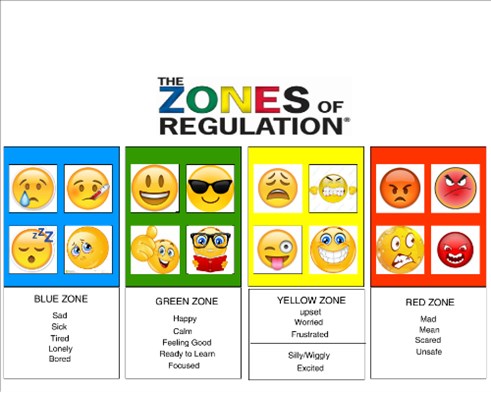
- Offer a safe space: Many people with ADHD benefit from regular sensory/movement breaks. We enjoy using the ‘Zones of Regulation’ to help identify how my LO is feeling and any build up of feelings to identify when the breaks are needed and how to help him to settle. Being emotionally aware is hard for any child, our little ones are still growing and learning. Visuals can help children to recognise their feelings and sharing your own feelings about things can too. Maybe you could put together a sensory corner or quiet corner? a regular safe space that a child can visit when needed can help reduce anxiety.
These are just a few strategies that we use daily to support our LO, have you got any strategies you’d like to share? Comment below!
 AutisMum