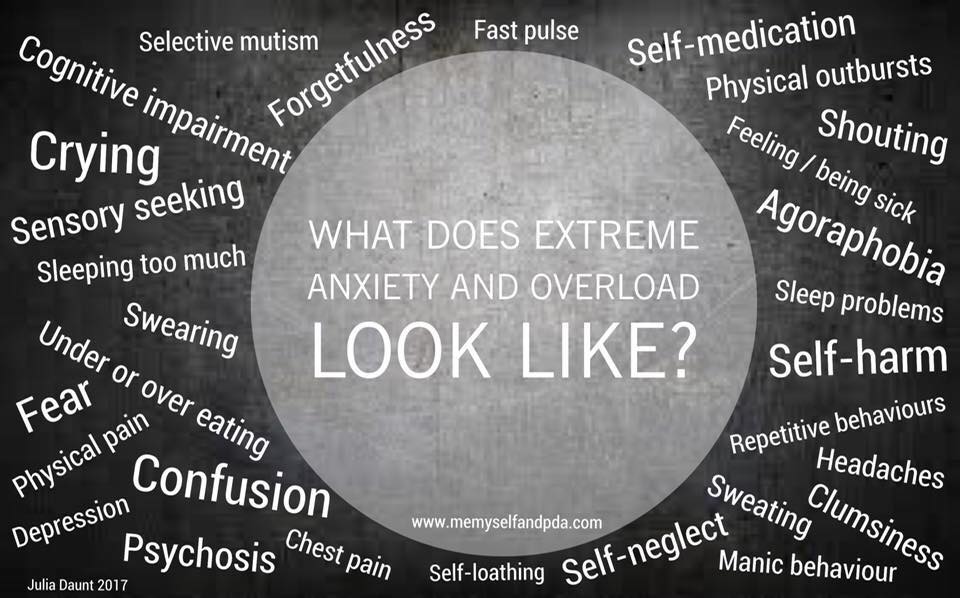
One of the increasingly known conditions that can come hand-in-hand with Autism and related SEN is pathological demand avoidance (or PDA for short!)
PDA is becoming more and more of a hot topic amongst many health professionals but, still, very few understand it deeply.
PDA describes the way that a person may struggle with everyday demands. PDA can leave a sufferer feeling as though a simple request is a personal attack, this leading to lashing out and meltdowns.
It could be a polite request to tidy up or the expectation of handing work in on time, to the neurotypical person these are questions that pose no threat but to the PDA’er it makes them feel targeted.
Symptoms can include:
Resisting and avoiding the ordinary demands of life.
Using social strategies as part of the avoidance
Appearing sociable on the surface
Excessive mood swings and impulsivity
Being comfortable in role play and pretence, sometimes to an extreme extent and the lines between reality and pretence can become blurred
Obsessive’ behaviour that is often social in nature
(as taken from the PDA society page, check them out below)
PDA can make everyday life very difficult and many parents feel that the ‘low demand’ approach suits their little ones most to relieve anxiety.
Some people refer to PDA as ‘Jekyll and Hyde’ due to the way behaviours can change in a matter of seconds but it’s important to remember that the PDA’er is experiencing a high level of anxiety and finding the right support techniques to help your little one is vital to avoid low confidence and further problems in the future.
If you or someone you know needs support with this then take a look through our links below:
https://www.pdasociety.org.uk/resources/Support-and-advice
https://www.pdasociety.org.uk/resources/resources-for-families
 AutisMum