Featured

Pathological Demand Avoidance

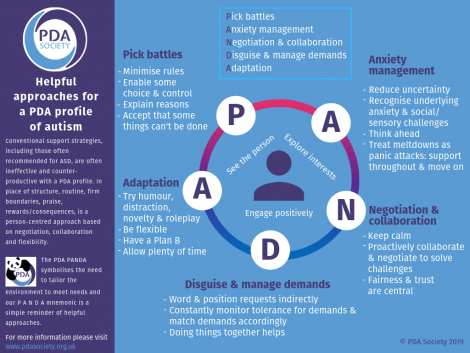
taken from Google stock images, memyselfandPDA.com

One of the increasingly known conditions that can come hand-in-hand with Autism and related SEN is pathological demand avoidance (or PDA for short!)

PDA is becoming more and more of a hot topic amongst many health professionals but, still, very few understand it deeply.

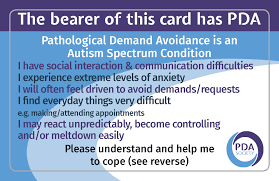
PDA describes the way that a person may struggle with everyday demands. PDA can leave a sufferer feeling as though a simple request is a personal attack, this leading to lashing out and meltdowns.

It could be a polite request to tidy up or the expectation of handing work in on time, to the neurotypical person these are questions that pose no threat but to the PDA’er it makes them feel targeted.

Symptoms can include:

Resisting and avoiding the ordinary demands of life.

Using social strategies as part of the avoidance

Appearing sociable on the surface

Excessive mood swings and impulsivity

Being comfortable in role play and pretence, sometimes to an extreme extent and the lines between reality and pretence can become blurred

Obsessive’ behaviour that is often social in nature

(as taken from the PDA society page, check them out below)

https://www.pdasociety.org.uk

PDA can make everyday life very difficult and many parents feel that the ‘low demand’ approach suits their little ones most to relieve anxiety.

Some people refer to PDA as ‘Jekyll and Hyde’ due to the way behaviours can change in a matter of seconds but it’s important to remember that the PDA’er is experiencing a high level of anxiety and finding the right support techniques to help your little one is vital to avoid low confidence and further problems in the future.

If you or someone you know needs support with this then take a look through our links below:

https://www.pdasociety.org.uk/resources/Support-and-advice

https://www.pdasociety.org.uk/resources/resources-for-families

https://www.pdasociety.org.uk/resources/books

Featured

Welcome back! (again!)

Just a quick message,

Yes, we are still here! We’ve been super quiet of late and we’re really grateful to those who stuck around!

It’s been a busy few months between, Christmas….new year…and all the bits inbetween! Back to school and everything that comes with it meant that i kept putting writing off and the blog took a backfoot.

But we are back! We aim to post at least twice a week, so if you have any requests for content please comment below!

Have a great week!

Featured

Tips and tricks to support a child with ADHD

Reference: google stock images

Children and adults can be wrongly assumed to be ‘misbehaving’ due to how their ADHD presents, it is vital to remember that this is not the case. Punishing a child for the behaviors they exhume because of their ADHD will only lower their self-confidence. Something they may already struggle with.

It can be hard sometimes in the midst of a meltdown to remember that what you are witnessing is due to high anxiety and emotion for your child, regardless of the situation or response. Reassuring your child that you are there and they are safe is the most important thing you can do at these times.

Reference: google stock images

There are other strategies that you can use for your child, you know your child best!

Here are some strategies that we use:

  • Give them time: Being patient, being present and listening is our number one rule. Being there requires no words and allows your child to invite you into ‘their world’. A person could have a million ideas in their mind at once so allowing time to process is super important!
  • Limit distractions: ADHD can leave a child feeling disorientated when their are so many different sounds visuals and stimulus around them, things you wouldn’t even think of! It could be a door closing or a creaky floorboard, people chatting. All of these can be very distracting for an already busy ind so try and limit them or offer a quiet space for a child to retreat to if needed.
  • Limit temptations: ADHD can leave a child reacting very impulsively, even when they know safety rules they can’t help but react without thinking. Maybe you can limit the amount of stimulus around them such as buttons or whiteboards left on or maybe you could offer a ‘safe version’ so the child can still get the sensory input they need but redirected to a safer version.
Reference: google stock images
  • Simplify Language: It’s easy to forget that, in times of ‘stress’, too any words can overload an already busy mind so limit the amount of language you use. Instead of saying “Can you put your shoes on?” you could change it to “(Name) shoes on”. Always use the persons name first so they are aware that your request is directed at them.
  • Don’t blame: Identify and support your child when they are struggling. It can be hard to differentiate what behaviours are as a result of your child’s struggle and what may just be developmental. Penalising behaviours that cannot be controlled by them will only affect your little one’s confidence. Maybe istead of saying “Stop banging” you could say “Godd gentle hands!” I’m a firm believer of postive reinforcement and acknowledging and praising the positive choices a person makes rather than ‘shooting them down’ for mistakes.
Reference: google stock images
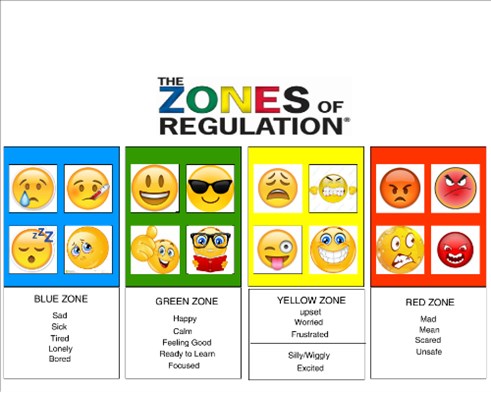
  • Offer a safe space: Many people with ADHD benefit from regular sensory/movement breaks. We enjoy using the ‘Zones of Regulation’ to help identify how my LO is feeling and any build up of feelings to identify when the breaks are needed and how to help him to settle. Being emotionally aware is hard for any child, our little ones are still growing and learning. Visuals can help children to recognise their feelings and sharing your own feelings about things can too. Maybe you could put together a sensory corner or quiet corner? a regular safe space that a child can visit when needed can help reduce anxiety.

These are just a few strategies that we use daily to support our LO, have you got any strategies you’d like to share? Comment below!

Featured

ADHD Awareness Month!

Google images

October is ADHD awareness month. ADHD is a shortened way of describing attention deficit hyperactivity disorder.

ADHD is a life-long condition that affects the brain. The altered brain acitvity that ADHD causes means that the person can experience these symptoms:

  • Difficulty concentrating on a task
  • Unable to sit still
  • Feeling constantly ‘busy’ (be it physically or mentally).
  • Feeling ‘on edge’ or anxious a lot of the time.
  • Finding it hard during occasions that require you to wait.
  • Talking excessively or interrupting others without meaning to.
  • Impulsiveness, often doing things without thinking.
  • Taking risks
  • Being easily distracted
  • Forgetting things on a regular basis
  • Appearing untidy or disorganized.
  • Carelessness and lack of attention for detail
  • Mood swings, often referred to as a ‘Jekyll and Hyde’ response as mood can change and escalate quickly without meaning to.

ADHD is a life long but does not need to be a life limiting condition. I can’t emphasise enough how passionate I am to advocate for the children who have been wrongly labelled as ‘naughty’, the children that have had multiple exclusions from their school unnecessarily and the children who miss out on experiences because they are in a constant battle with themselves through no fault of their own.

ADHD can be overwhelming for both the person with it and the family surrounding them. However, with a personal approach and a good support network ADHD does NOT have to mean your child is limited to what they are able to experience and achieve!

You can find more info and support via these links:

https://youngminds.org.uk/find-help/conditions/adhd-and-mental-health/

https://www.adhdfoundation.org.uk/

https://www.nhs.uk/conditions/attention-deficit-hyperactivity-disorder-adhd/

Featured

10 things to do this Autumn with the kids!

Autumn is well and truly here.

Reference: Google images

I must admit, I absolutely love waking up in the morning to the cotton candy coloured clouds as the sun begins to peek through. Pulling out all my winter jumpers and throwing on something super cosy before settling myself down (eventually) to a warm bowl of steamy porridge.

However, the darker nights and the colder days mean that our kiddos are not as enthusiastic to venture off outside as we are! Maybe you find yourself constantly suggesting amazing ideas of days out to be greeted with a “No way” or “It’s too wet!”.

We love to find things to do both in and out the home, so here’s our list of things we love to keep ourselves busy with!

  1. Visit a museum- Many museums around the country are completely free to visit (and are dry!). Make it more exciting for your little ones by creating a hunt for them to complete on the journey. You could even check out the attractions web pages before visiting as many do have trails ready to print!
Reference: Google images

2. Scavenger Hunts!- With the seasons changing, it’s the perfect time to find a free printable (or create your own) scavenger hunt. There are so many colours and textures to find from yellowing leaves to shiny conkers. Stick on the willies and visit your local park.

Nature detectives is a fab site and has free printable scavenger hunts for our kiddos! https://naturedetectives.woodlandtrust.org.uk/naturedetectives/activities/2015/09/amazing-autumn-scavenger-hunt/

3. Arts and Crafts- Anything messy is a big hit in our house! Maybe you’ll want to make your own crayon tree rubbings or paint leaf printings. Let their imagination go wild!

Find some quick inspiration and ready made resources here! https://www.twinkl.co.uk/search

4. Baking- Introduce your little ones to the changing seasons goodies! Pumpkin pie making, making your own spiced squash and gingerbread men are fab for this time of year!

Reference: Google images

5. Pumpkin Picking- This has become a bit of a tradition in our family, there’s nothing we like more than donning the wellies and puffy coats before nipping to our local farm to pick our own pumpkins. We have great fun seeing who can spot the biggest, the smallest or ‘ugliest’ pumpkin before warming up with a nice hot chocolate!

6. Decorations- The first thing I think of when I hear the word ‘Autumn’ is Halloween and the changing colours. Why not get the kids involved with decorating the house? Make your own garlands to make your home look super spooky!

You can find an array of ideas here! https://www.twinkl.co.uk/search

7.  Disco time!- Don’t put all that hard work of making your own decorations to waste! Make your own ‘home disco’. It’s the perfect excuse to get family and friends together and the kids will love it!

8. Harvest festival- With all this celebrating and treats it’s easy to forget how lucky we are with what we have. Contributing to a local food bank or towards a harvest collection reminds our kids how to empathise and help others in need. Maybe you’d like to visit your local church for a harvest service or maybe just donate something to your local food bank. It all helps!

9. Go camping!- Camping in the autumn has a completely different feel to it as opposed to the summer. It’s the perfect time for family bonding, drinking hot cocoa by an open fire and toasting marshmallows.

10. Conker collecting: Need i even say that this is a given in many households as soon as the Autumn sets in?!? My LO adores watching them fall and breaking open their familiar green spiky shell! Conkers are great to decorate, to paint with or to create your own ‘homemade bowling alley’. (They’re good for keeping spiders away too!)

Thanks for reading and have a fab time making memories with you and yours!

Featured

5 Top Tips for helping a child with PDA

What is PDA?

PDA, or pathological demand avoidance, is a condition that can leave a child feeling very anxious. PDA can mean that even the simplest of requests feel like an ‘attack’ to a person which can result in a fight or slight response and/or withdrawn and seemingly defiant.

PDA is not a condition that is singularly diagnosed but is often referred to as a person having ‘traits’ of a PDA profile. PDA can also be prevalent alongside other cognitive conditions such as autism.

From personal experience, the strategies that are most helpful to a child with PDA differ very much to strategies that are used for an autism profile or similar. I find that a PDA approach needs to be very tailored to the individuals needs, it needs to support high anxiety and needs to allow the person to feel an element of feeling ‘in control’.

So, here are my 5 top tips (from my own experience) that help our little PDA warrior!

  1. Limited choices– Limit the choices to what you feel your little one can cope with. Having a wide variety of unstructured choices can be overwhelming, try to offer 2 or 3 choices and then build on that as your LO gains confidence. Instead of saying “Which book would you like from the library?” pick out a couple to choose from.
  2. Keep it simple!– Using long and confusing vocabulary/sentences could make it hard for a little one to understand what you are expecting of them. Use shortened requests and keep language simple.
  3. Be patient– We’re all guilty nowadays of rushing around, this may only create more panic for a person with PDA traits. Take your time when asking and be mindful of your tone of voice as it can be hard for some children to detect how a person is feeling through voice tone. Give them time to process what you have asked and act upon it.
  4. Props!– I will NEVER get tired of expressing how much we love sand timers in our house! They have been a godsend with transitions between activities and finishing our reward time! Using props such as timers can really help to visually remind and stimulate a little person into when something will finish. Maybe your little munchkin has a favourite toy or can use a clock and that can also be incorporated. The point of using props is that the request has come from something they find more predictable (as they remain the same) which means it’s easier for a child to accept.
  5. Shall we…?– A person that has PDA traits can feel incredibly anxious without a feeling of some kind of control. Simple requests like “Can you grab your pencil to write?” can be overwhelming as they see no scope for negotiation. Changing the way you voice these requests can help support a person with PDA traits amazingly, instead you could say “Shall we use the long pencil, or the short pencil to write?” which will relax any anxiety.

Thanks for reading, please remember these are just a few ideas that we use with our little ninja and should be adapted to suit your LO.

Have a great day!

Featured

PDA and ‘conforming’

Todays society has so many unspoken and assumed ‘rules’.

Be it in shops where you will find an array of pink in the ‘girls’ section and blue ‘for boys’, or how a child is expected to kiss their family member goodbye despite saying “No, thankyou”. When did these silent expectations begin to dictate how we live and how we are socially accepted?

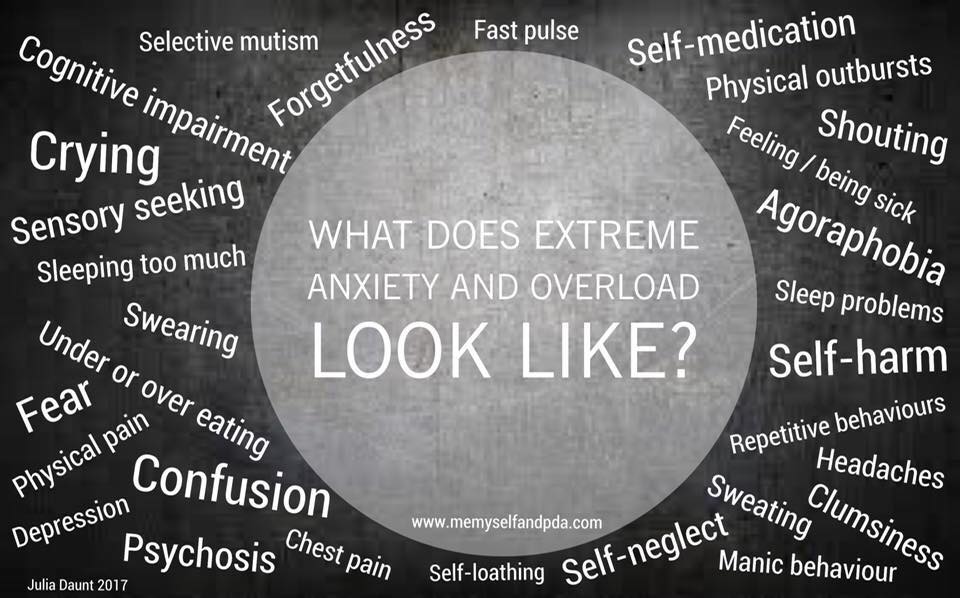
PDA (or pathological demand avoidance) describes the difficulties that a person can face with everyday demands. It could be brushing your teeth or waiting for a bus- these daily tasks can feel like an attack to a person with PDA. People with PDA often have high levels of anxiety, living in fear of the unpredictable world around them. Lots of people are often described as ‘Jekyll and Hydes” due to their fight or flight response meaning they can experience unpredictable and extreme meltdowns which could be running off, lashing out or stimming at the simplest of ‘demands’.

Although PDA behaviours can seem very extreme (and unrelenting at times), it is important to remember that the person going through this is only trying to keep themselves feeling safe. It’s no different from a person passing out; the body needs to ‘shut down’ to reset and then, when feeling safe to do so, they will ‘wake up’.

Other features of PDA can include:

  • Manipulating situations to feel in control.
  • Withdrawing and/or physically excusing themselves.
  • Listening to a request but then not acting upon in.
  • Seemingly ignoring the world around them.
  • Defiance and/or negotiating a request put to them.
  • High anxiety
  • Creating distractions and changing the topic.
  • Unaware of ‘social norms’.
  • May seem chatty and confident but lack further depth in understanding conversation comprehensively.

These are some, but not all, charateristics of PDA. PDA is often also associated with being part of the autism spectrum.

Reference. Google images Julia Daunt 2017

I read an article the other week and it really gave me another perspective at thinking about my LO’s PDA.

Children with PDA often resist praise and will react negatively if given to them. Obviously this isn’t accurate in all cases but I, personally, have experienced this with my Little Man.

When a child with PDA is acting upon a request you have given them they are conforming to something that they may not have felt comfortable doing…they are being praised for acting in a way that society says is right and not in a way that makes them feel secure and comfortable. This is why a lot, but not all, children can seemingly find accepting praise difficult.

To begin with it broke my heart, as a mother who wants to encourage and support her child, that my LO didn’t want the same recognition for his achievements as other people crave. That’s when i starting thinking of indirect ways that my child could still realise that i have recognised his achievements without making him feel uncomfortable.

My next blog post will be listing my personal strategies for this…so stay tuned!

You can also find more info on PDA here…https://www.pdasociety.org.uk/

Have a fab week!

Featured

Autismum best SEN blog 2019 Award!

For many years now, I have been using Twinkl as my main site of searching for fab resources and inspiration for lots of home teaching….it certainly has saved me a lot of time over the summer holidays! I absolutely love the fact that i can edit resources to suit our needs too!

Twinkl is an amazing site where you will find a huge array of resources for children whether it be academic or emotional support within the home. It is used by home schoolers, parents and schools all over the country and it’s regularly updated with new resources that fully incorporate the national curriculum. Find some amazing resources here….. https://www.twinkl.co.uk/

So, when Will from Twinkl emailed me to ask if I would like to feature in his blog to introduce Autismum….i was absolutely delighted!

You can find the post regarding Autismum being awarded best SEN blog for 2019 (!) here…https://www.twinkl.com/blog/twinkls-top-sen-blogs

You can also take a look at other amazing bloggers that were involved too!

Thanks very much to Will and the team at Twinkl for their continued support. I look forward to collab-ing with you again soon!

Featured

10 Top Tips for making ‘back to school’ easy!

That moment when it’s time to start the uniform shopping and start getting back into your ‘normal routine’ of alarm clocks and pre-making lunches can be daunting for parents and children alike, so here are my 10 top tips to making the transition from ‘holiday mode’ to ‘back to school’ super easy!

  1. Make a transition booklet– this can include pictures from your school holidays to share with friends, pictures of your upcoming new teacher or classroom, a timetable of your upcoming routine or anything you can think of to prepare your little one (and yourself!) for the upcoming term. Use this to talk to your child about their feelings with starting school and how to share and solve their worries.

2. Practice dressing– The school holidays are a great time to encourage your child to practice with putting on their uniforms! It will make your mornings a lot easier in the long run! Make it fun and don’t worry if they don’t get it first time! Have dressing races, make a ‘time trial’ game and just enjoy it. Making a game of dressing can avoid pressure on your kids which ends in your child still not being ready when it’s time to go out the door!

3. Preparation– I can’t emphasise enough how much preparing things the night before makes my life a lot easier. Pre-make lunches, lay out the uniform and have a ‘go-to’ place that your child knows about so they can access their own bags and equipment. It does wonders for their independence also!

4.Travelling – This is especially important for children who are just going into secondary school or starting a new school. Practising the route that you will take to school can alleviate a lot of anxiety that lots of kids (of all ages) can feel when visiting a new school. Maybe you’ll be taking the bus, walking or cycling?

5.Batch cooking– If you haven’t heard of this, where have you been? Batch cooking is pre-preparing meals and then storing them (in the fridge or freezer), which saves you time and money! You could make lunch muffins, lasagnes, sandwiches, cereal bars and so much more! I understand that some parents may not have a lot of time to do this but making just one extra portion when cooking family meals can mean that dinners after school are a lot simpler.

6. Toileting– Obviously this one would be more for the younger years! Getting your child trained for school may be daunting and you’ll find yourself packing their whole wardrobes in fear of them coming home with belongings from lost property. But practising during the summer holidays is crucial to prepare your child for school. Try not to pressure your child but using songs, books and stories to encourage and remind your child to go. You’ll soon be doing that victory dance (we all do it!) when your little one has it nailed!

7. Rise and shine!– Setting that alarm for ‘back to school’ can be rough. I, personally, prefer to start doing this at least a week in advance. It then prepares me and my little one for the upcoming academic year.

8. Uniform– Buying uniform can be an expensively gruelling task, only to find that on your first day back your child has outgrown their trousers or their shoes are pinching their toes….Disaster! Trying to leave it till the last 2 weeks or so can be helpful with sizing but feels very last minute. I like to stock up on ‘growing into it’ shirts and trousers when i see a good offer. Saving on time and pennies!

9. Include your child– As the ‘stars of the show’ for going back to school, i feel including your kids in process for choosing new shoes, choosing stationary and preparing timetables, and the like, super helpful for making them feel included in all aspects of the transition back to school.

10. Social media– Social media and technology is becoming more and more evident in today’s society. So why not use it to your advantage? Most schools have their own private Facebook pages where they post regularly. I find these pages so useful for getting to know other mum’s in my child’s year and arranging play dates with the children that will be in your child’s class. Encourage positive play and healthy, happy friendships (which can be challenging for any child, let alone a child with SEN).

Featured

It’s been a while…

Wow! Where on earth did those 6 weeks go?

It feels like I only blinked and the summer holidays were over! We had an amazing 6 weeks filled with sun, fun, games and days out but it’s time for our little pickles to go back to school. I have to say it sure hit me hard to have weekdays now where I don’t have my little sidekick by my side!

So, I thought I’d ‘check in’ and denounce myself from being MIA. Currently, we’re settling back into normal routine, which can be so hard for lots of children to do after such a long period of time away from school let alone a child with SEN. Going back to the days of alarm clocks, ironing the school uniform and promising yourself that this morning won’t be such a rush (although you know you it always will be!). It can be unsettling for parents and children alike so kept tuned for an upcoming ‘Top Tips’ for making going back to school a smooth transition, whether you are a returning pupil or starting a new adventure in secondary or primary school I hope you find methods that allow going back to school a smooth ride.

Have a great day!

Featured

Resources and aids to help your SEN child on a budget!

It’s been a while! After my brief period of being MIA I’m back with a biggie! Finding resources and aids to help your SEN child with a low budget!

When it comes to aids for our SEN kids we immediately imagine of all the wonderful things that we can have to support out little ones. It isn’t until we finally get to sit down at the end of the day (preferably with a cuppa), this kids are in bed and we, yet again, find ourselves trawling through the ‘oh-so perfect’ Instagram posts and Etsy inventions that leave us either broke or in envy of other users. Going through the endless catalogue of over-priced perfectly formed aids that we convince ourselves we can’t find any cheaper elsewhere with the same quality.

I’ll be the first to reassure you, it doesn’t have to be this way!

Having an SEN diagnosis may mind-boggle parents and some companies like to exploit this fact and charge extortionate amounts for something that you can find much cheaper elsewhere.

So here are my Top Tips for supporting your child without breaking the bank!

  • Shop around…. It sounds obvious but I’ve lost count of the amount of times I’ve seen parents online comment “I’ve just paid £….. for mine!” Do the research and take your time to find the aid you need, don’t feel pressured into buying in a rush.

  • Join social media…There’s no doubt about it, social media is used so widely for so many different reasons nowadays. You can always bet to find a variety of SEN second hand pages on Facebook. Join sites like Freecycle, you’ll never know wha you’ll find! Don’t be scared of posting a ‘WANTED’ post for items, you never know what people have lying around…if you don’t ask then you don’t get.
  • Make your own!… Obviously there are limits for this for safety (and sanity!) reasons but it is perfectly doable. Whether it’s fashioning your own homemade symbols/flashcards or altering clothing to suit…give it a go!
  • Look in charity/bargain shops… I’m not the first person to divulge my love of Poundland, in fact there is a whole appreciation page on Facebook! It’s called the Poundland appreciation society and there are always updates on new stock and upcycling ideas to inspire you. Shops like this and charity shops are a treasure trove for finding items that may be purposed elsewhere but can be upcycled or used as SEN items. My favourite buy so far has to be from Flying Tiger Copenhagen when they had their £2 sale….i stocked up on wobble boards and a gym ball which is a firm fave in our family!
  • EBAY…Need I explain? A well used site that helped me get a whole sensory centre for my LO for just 30 percent of the RRP price! Don’t be put off by having to find a courier, it’d still work out cheaper than brand new!
  • Resources… It’s pretty common now to see individuals making their own PECS and flashcards and cashing in…which is fine but if you have the time to do it then try making/sourcing your own! Twinkl has an array of ready made resources for learning or teaching daily skills. Better still you can edit some of them to suit your needs. I’ve linked some here…https://www.twinkl.co.uk/resource/t-s-2331-ks3-visual-timetable-resource-pack.

https://www.twinkl.co.uk/resource/t4-s-303-daily-routine-visual-aid

The official makaton site also has free resources…https://www.makaton.org/shop/shopping/browseStore/Free-resources

And the National autistic society has free online training courses…https://www.autism.org.uk/professionals/training-consultancy/online.aspx

If you’re still struggling to find resources for your LO then don’t be afraid to ask your child’s school or nursery for help. Makaton and PECs symbols are more widely used in schools and i’m sure they’d be more than happy to print you a copy!

There you have it, just a few top tips to save you money this summer!

Featured

Tackling your childs EHCP

When you have a child that is in need of extra support, it can be daunting knowing where to go, who to turn to and what you need to do to help support your child in any situation they face.

“What are EHC Plans?”

EHC plans (or EHCP’s) have replaced what were more commonly known as ‘Statements’. The plans help to distinguish and detail your childs needs and how best to support them. It can be an overwhelming task to begin the process of an EHCP for your child but it can be done!

EHCP plans help to share your child’s needs with anyone that comes into contact with your LO, be it a school, a pediatrician or a nursery. It is vital to have a plan to get the support and therapy your child may need. You also can’t access a ‘specialist school’ without an EHCP.

A strong EHCP will have views from staff, care providers, parents and any therapy or assessments that your LO has had. This information is then processed into one document by your local council to prepare and can help towards any interventions your little one may need.

Step One

You or someone who cares for your child may have noticed your child’s’ additional needs. Maybe you’re even lucky enough to have a diagnosis for you child, maybe ‘red flags’ were brought up by their school….either way the causes for concern need to be detailed and documented to ensure your child is correctly supported. My best advice is to write down any changes or behaviours as you see them, it proves handy when you come to write about your child’s’ needs. You wont believe how missing out tiny little detail can affect whether your request is approved or rejected.

An EHCP needs to details your child at their greatest time of need. I’m not gonna lie, it is always soul destroying when you have to sit and detail how your child finds …. hard or how he missed out on … due to his anxiety but it’s the only way to ensure that anyone coming into contact with your child will know what they need help with and what they don’t.

Step Two

So, the most important thing to do next is to gather up any medical letters, referral letters and cover letters from educational providers, be it your child’s school or nursery. An EHCP that has the support from all the people who come into contact with you child is definitely a lot stronger than without a range of professional views. Be sure to send copies of any letters not originals as you will need to keep them for your own reference.

If necessary, sit down with your child’s provision and discuss what your concerns are. SEN can present differently in children in different settings so you may’ve noticed something different to what they have and vice versa. Make sure that all involved are in agreement of your little munchkins needs to keep the EHCP information consistent.

If you’re child is able to complete their section on the EHCP with their views then include them. Talk to them about how it will help them with things they find difficult and how you are all working together to make life easier for them. It can be through drawings, typed or written. Your child’s view, in my opinion, is the most important so include them!

Step Three

Check, check and triple check!

Check any information that you have gathered to ensure it is detailed and nothing has been missed. You can also request a meeting or a copy from your child’s care providers to ensure you are happy everything has been included to be accepted for an EHCP.

It’s really important to make sure you have everything detailed, dated and the name of who provided the document to ensure a strong EHCP.

Don’t avoid asking for support, IPSEA is a brilliant service who are able to support parents through the EHCP process. IPSEA can help to check documents, talk through the paperwork with you and help seek information to include on the plan.

The KELSI website also has pages dedicated to EHCP’s, they have guidance, information (including legalities of an EHCP) and electronic pages that you can type if prefer to not have it as a written version. This link https://www.kelsi.org.uk/special-education-needs/special-educational-needs/education-health-and-social-care-plans/how-to-apply-for-assessment is definitely worth a look!

Step four

Don’t be disheartened if you don’t get your EHCP request rejected first time. The appeals process can be started by you, all information will be in the documents that your LA provide you to appeal a decision. You get a period of time also if you feel that some details in the EHCP need changing. The EHCP is with the child in mind and the parents views are first and foremost.

The last step is to be sure to look after yourself! Between meetings, paperwork and the realities of supporting an SEN you can be left feeling drained and exhausted!

Pop round to your friend for that cuppa, leave the washing for half an hour to watch that TV show and spend time playing in the sun and being silly with your LO.
Featured

8 Top Tips for travelling with your SEN child this summer.

The summer holidays are just weeks away now and parents all over are planning fun packed days for their little cherubs. One recurring subject that always seems to pop up in discussion, though, is the journey that parents and children simultaneously endure when out on their travels. A ‘bad’ journey can be a real mood killer and scupper the excitement that leaves our kids squealing with delight before we’ve even arrived at our holiday or family day out! Whether it’s travelling by car, plane, train you name it and I bet that most parents have packed everything (and the kitchen sink!) in order to keep their kids entertained. This is all well and good until you open the bag and find that the ne most important item is still left of the kitchen side (story of my life.) So, here it is, my top ten tips that I always use when travelling to try and make the journey easier for my LO.

1. Snacks! You can NEVER have enough snacks packed when travelling with children. Why is it that every summer holiday our children suddenly turn into mass eating machines!?! I, personally, like to pack our lunch for the day in a backpack but then have a separate box packed with healthy snacks for LO to dip into whenever he needs to. I’m always sure to pack long lasting foods…oaty bars and bananas are a firm favourite! Keep sugary treats to a minimum to avoid sugar highs and try to pack foods that can aid travel sickness if your LO suffers. Fresh ginger or ginger biscuits can help or sugar free mints can help avoid travel sickness.

2. Paper Rather than pack your bags to the brim with colouring books games and stuff that will weigh you down just take a booklet of plain paper. There are so any different games and activities you can use it for whether a simple noughts and crosses or a family game of guess the drawing. The list is endless! Be sure to take pencils as opposed to pens to ensure that ink cannot run out and take a sharpener! (you can never be TOO prepared!)

3. Wipes and sanitiser It’s certain that travelling with kids will end up in mess and sticky hands so always be sure to carry a fresh pack with you for those emergency moments. You never know what will be around when you need to stop for a loo break so sanitiser will become your best friend when you find the toilet on the service stop has no soap in the dispenser (is this just me this always happens too?)

4. Small outside play toys. You may think I’ve gone potty when mentioning this but between toilet stops and refreshments stops you may find yourself frequently stopping on your car journey. Being stuck in a car for long periods of time can be frustrating for any child let alone a child with SEN. For that reason we always take a small ball for if we see a park on our way and a skipping rope that helps to allow our LO to exert some energy no matter where we stop. You could even try and pre-plan what is around you before travelling to find park stops!

5. Sensory items These are an absolute MUST for my LO. A lot of children find sensory strategies calming or feel relaxed just knowing that their favourite sensory items are available. If you wanted to really engage your LO you could even wrap up new or existing toys/items so it’s more exciting! Try to find items that stimulate your childs’ needs, for example if you have a child that is sensitive to noise take their ear defenders, if you have a child that is visually sensory seeking take a torch or a cause and effect light up toy (the noisy ones are always a hit! Lol). Giving your child the sensory input they need will really relax them on your journey.

6. Treats It’s a given that, as parents, we promise ourselves that we won’t fill our kids with sugary treats but in moderation it’s ok. I find that using treats as ‘prizes’ will help engage a child in new games that they may resist ordinarily… like I-Spy, Never have I ever, Fizz-buzz, spotting cars and What am I? to name a few.

7. Maps and routes If your kids are anything like my LO then they are full of curiosity about the world around them and being informed of where we are going can really help. I like to use Google Maps to aid their questions as to our journey and our route. You could then use it as an educational game, who can spot the….(station etc), how many miles to… and what road are we now on. If anything it’ll stop the “Are we there yet” question!

8. Electronics I begrudge giving my LO his favourite console for the entirety of our journey or it’d be near impossible to get him off it! So I like to pack it without him knowing as a special treat for doing his best whilst travelling. Even as adults journeys can be long and gruelling and meltdowns are can happen (it’s not the end of the world if they do!)

So, there we are just 8 of the things that I like to do when travelling. Relax and have fun, it’s never like you imagine it to be!

Featured

Sorting your Summer Holidays!

So, the countdown has begun and the summer holidays are nearly here! I’m sure I’m not the only person who woke up this morning questioning where the first half of the year has gone in amazement!

For me, June and July mean only one thing….planning!

I don’t know about you, but I find that my darling boy thrives off of routine. Without it, he can find the open endedness of the summer holidays a struggle. Coming out of the days where he performs the same ritualistic tasks during the week and where he knows what to expect can be unnerving for children with SEN.

So, you may be thinking….how on earth can I plan something for the whole 6 weeks of the summer holidays? Where do I begin? I won’t lie, everytime I begin my planning I feel like I’ve just been catapulted in the deep end of the pool without any warning. I sit at the computer trawling though lesson plans and Key Stage topics of learning feeling like I’ve turned a corner and bumped straight into a giant who is looming over me. However, that feeling soon goes and we end up super excited for the weeks to come.

Lets start at the beginning

So, first things first I find that making a week by week plan really helps focus my LO. Each week of the summer holidays will have a theme. I find that having a theme focusses the attention of my LO’s very busy mind that races a million miles a minute. It reminds him that there is purpose to each week.

Last year we did space week, transport and travel week, dinosaur week to name but a few. Pick topics that you know your little munchkins would really enjoy. Make it engaging and be as silly as you want, there’s no limit (although I was questioning where that limit was as we spent the day moving only like different dinosaurs!) But honestly, follow your childs lead and excite their imagination. It may sound cliche but having fun is all that it’s about!

Planning each week

So, by now you’ve got your topics for each week and you’re already resenting staring at the computer for hours planning. Let me make it easy for you!

There are so many sites around that even schools use to aid planning of lessons etc so don’t feel overwhelmed. Twinkl is an amazing site that has thousands of different resources for each age group. Their content is regularly updated to keep up with current trends and some are even editable so it’s definitely worth a look. A lot of the resources are FREE (yes, really!) or you can subscribe for around £50+ for the year to have more access to content. Sparklebox is another site that it used a lot within schools, they also have an array of resources to help support your child with learning and play. Again the content is FREE and what is amazing is that educational professionals also upload resources they have made so you have the peace of mind that the resource is likely to be educational and bundles of fun!

Another thing that I like to do is to reference back to schools homepages. On there you can find topic grids, what is great about topic grid is that you can use that to reference ideas of what your child would/should be learning based on what year they are in. You can then use that topic grid to aid towards finding resources and planning a learning/invitation to play task.

Social media can also be a great way to find ideas for each of your topics that you have planned. With the likes of DADlab on facebook to give you ideas for all things science and scrolling through instagram (planning purposes only, honest!) for inspiration for crafts, recipes and activities you are sure to come up with a variety of activities that your little ones will love.

Lastly, I like to remember that despite all this planning that my child can take the lead when he feels ready to. Changes happen and not everything has to be so ‘regimented’. Some of my planning does go to ‘waste’ because we’ve done something different but giving him the stepping stones for play and learning to help ignite his imagination is worth a million hours of doubting myself during planning. Play should be open ended for children and when they ‘take the reins’ you’ll be sure to have a day full of giggles and fun.

Subscribe and stay tuned for upcoming regular instalments of different ideas for over your summer holidays!

Featured

Hello!

Hi there! Welcome over to Autismum.

I bet you’re sat there right this minute pondering as to why the word Autism is continuously spelt incorrectly…..either that or you get my simpleton sense of humour!

I’m a mother of one, one little beautiful being who has held my heart for nearly a decade. One handsome little munchkin who just so happens to have a diagnosis of Autism Spectrum Disorder(or ASD for short!)

I have questioned myself for a very long time as to starting my own blog and wondered “where would I begin?” or “who would want to read it?”. However, I guess the fact you’re reading this has meant I’ve bitten the bullet and taken the blogging plunge!

I can’t say for definite what the content of this blog will be but am certain you’ll see LOTS of posts regarding my own experiences in the journey that comes with having a child on the spectrum.

Whether it be information, daily rants, advice or new ideas I hope to use this platform to aid others, connect with like-minded people and create a loving community who can also help spread awareness.

I look forward to beginning my blogging journey with you!

Design a site like this with WordPress.com
Get started